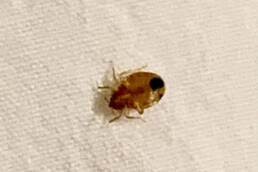


When people think about bed bugs, they usually imagine the small insects that bite during the night. But the real challenge in stopping an infestation often comes from something much smaller—bed bug eggs.
Bed bug eggs are tiny, well hidden, and very resistant to many common treatments. If even a few eggs survive, they can hatch and start the infestation all over again. Understanding why bed bug eggs are so difficult to eliminate helps explain why professional treatment is often necessary.
What Do Bed Bug Eggs Look Like?
Bed bug eggs are extremely small. Each egg is about the size of a grain of salt and is usually white or slightly translucent.
Because they are so tiny, they are difficult to see without careful inspection. Bed bug eggs are also sticky, which allows them to cling to surfaces where they are laid.
You may find eggs in places such as:
- Mattress seams
- Furniture joints
- Cracks in walls or baseboards
- Behind headboards
- Inside small crevices near sleeping areas
These hidden locations help protect the eggs from disturbance.
How Quickly Bed Bug Eggs Hatch
Bed bugs reproduce quickly. A single female can lay several eggs each day and hundreds over her lifetime.
In most cases, bed bug eggs hatch within about 6 to 10 days, depending on temperature and environmental conditions.
Once the eggs hatch, young bed bugs—called nymphs—begin searching for their first blood meal. After feeding and molting several times, they grow into adults that can reproduce and continue the cycle.
Because the process happens quickly, a small number of surviving eggs can lead to a new infestation in a short time.
Why Bed Bug Eggs Are Hard to Find
One of the biggest reasons bed bug eggs are difficult to eliminate is that they are hard to spot.
Their tiny size and pale color allow them to blend in with many surfaces. They are often laid in tight cracks or hidden spaces where people rarely look.
Even if homeowners search carefully, eggs may remain hidden inside:
- Furniture frames
- Wall voids
- Carpet edges
- Electrical outlets
- Box spring interiors
Because of these hidden areas, infestations often continue even after visible bugs are removed.
Why Many Treatments Don’t Kill Eggs
Another challenge is that bed bug eggs are more resistant than adult bugs.
The eggs have a protective outer shell that helps shield the developing insect inside. Many chemical sprays and over-the-counter treatments do not easily penetrate this shell.
This means a treatment may kill adult bed bugs but leave eggs unharmed. When those eggs hatch days later, the infestation begins again.
This is one reason why repeated treatments are often needed when using certain chemical methods.
Why Timing Matters in Bed Bug Control
Because eggs hatch within days, timing plays an important role in eliminating bed bugs.
If treatment removes adult bugs but misses eggs, the newly hatched nymphs can quickly grow and reproduce.
This cycle is what makes bed bug infestations seem to “come back” after treatment. In reality, the original eggs simply survived and later hatched.
Effective bed bug control must address every life stage at the same time.
Why Heat Is Effective Against Eggs
Unlike many chemical treatments, heat affects bed bugs physically rather than chemically.
When temperatures rise high enough, heat penetrates surfaces and reaches the hidden spaces where eggs are located. At lethal temperatures, both adult bed bugs and their eggs are destroyed.
This makes heat treatment especially effective because it targets the entire infestation at once.
Heat can reach areas such as:
- Inside mattresses and box springs
- Deep within furniture
- Behind walls and baseboards
- In cracks and hidden voids
By reaching these spaces, heat reduces the chance that eggs will survive to restart the infestation.
Why Professional Treatment Matters
Bed bug infestations are difficult to eliminate because the insects hide well and reproduce quickly. Eggs make the problem even more challenging.
Professional treatment methods are designed to eliminate bed bugs at every life stage, including eggs hidden in hard-to-reach areas.
Professionals understand where bed bugs hide and how to treat the entire environment instead of only the visible problem.
Experienced companies like Hot Bugz specialize in thorough treatment approaches that address both adult bed bugs and their eggs, helping prevent infestations from returning.
Signs Bed Bug Eggs May Be Present
While eggs are hard to see, certain signs may suggest they are nearby.
Homeowners might notice:
- Tiny white spots near mattress seams
- Clusters of eggs in furniture cracks
- Shed skins from growing nymphs
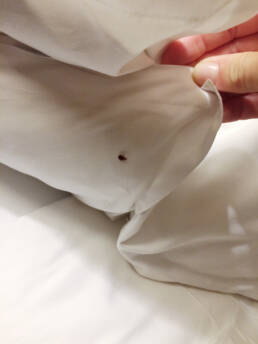
- Small dark stains from bed bug activity
If these signs appear, it’s important to address the infestation quickly before eggs hatch and spread the problem further.
The Bottom Line
Bed bug eggs are one of the biggest reasons infestations are so difficult to eliminate. Their small size, hidden locations, and protective shells make them harder to kill than adult bugs.
If even a few eggs survive, they can hatch within days and restart the infestation. That’s why complete treatment must target every life stage at once.
By understanding how bed bug eggs work and why they are so resilient, homeowners can see why professional solutions are often the most reliable way to stop the problem for good.
Ready for an expert opinion? Get in touch today!
We kill bed bugs in the infested space and surrounding walls by heating the space to a temperature of 135°F, killing all bed bugs and their eggs. If you have a bed bug problem, we have a solution. Exterminate bed bugs today with Hot Bugz. It’s safe and you get to keep your stuff. Call us today for a free consultation.