


Finding bed bugs in your home or apartment is stressful enough on its own—but figuring out who has to pay for treatment can make things even more complicated. In Denver, as in many cities, both tenants and landlords have legal responsibilities when it comes to handling pest infestations. Understanding those responsibilities can help you avoid confusion, save money, and make sure the problem is handled the right way.
So, who pays for bed bug treatment in Denver—the tenant or the landlord? Let’s break down what the law says, what each party should do, and how to handle a bed bug situation fairly and effectively.
What Colorado Law Says About Bed Bugs
In Colorado, the Residential Tenants Health and Safety Act (C.R.S. 38-12-1001) clearly outlines responsibilities for both landlords and tenants when bed bugs are discovered. The goal of this law is to ensure infestations are treated quickly while keeping both parties accountable.
Here’s how it works:
- Landlords must provide tenants with a habitable, pest-free living environment. If bed bugs are reported, the landlord must act promptly to have the property inspected by a qualified pest control professional.
- Tenants must report suspected infestations in writing within 96 hours of discovery. They must also allow access to their unit for inspection and treatment.
If bed bugs are confirmed, the landlord generally pays for the inspection and treatment costs—unless they can prove the tenant caused the infestation through negligence.
Landlord Responsibilities
Under Denver and Colorado law, landlords are typically responsible for arranging and paying for bed bug extermination. The reasoning is simple: bed bugs are considered a health and safety issue that affects the habitability of the property.
Landlords must:
- Respond promptly to tenant reports and schedule a professional inspection.
- Hire a licensed pest control company to handle treatment (self-treatment or store-bought sprays are not acceptable).
- Treat all affected areas, including nearby units, if the bed bugs have spread beyond one apartment.
- Provide reasonable notice before entering the tenant’s unit for inspection or treatment.
Landlords cannot charge tenants for inspections or treatments unless they have clear, documented evidence that the tenant caused the infestation. Even then, the cost must be handled according to the terms of the lease and state law.
Tenant Responsibilities
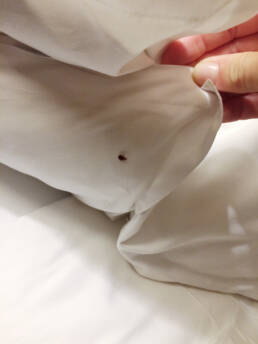
Tenants also have important responsibilities when dealing with bed bugs. As soon as they suspect an infestation—such as finding bites, seeing bugs, or noticing stains on bedding—they must:
- Report the issue in writing to the landlord within 96 hours.
- Prepare their unit for inspection and treatment as instructed by the pest control company. This usually includes washing and sealing linens, vacuuming furniture, and clearing clutter.
- Cooperate with the pest control process, including allowing access for follow-up visits.
If a tenant fails to report an infestation promptly, refuses access to their unit, or doesn’t follow treatment instructions, they may be held financially responsible for additional costs.
When the Responsibility Isn’t Clear
Sometimes, it’s hard to determine where the bed bugs came from—especially in multi-unit buildings. They can easily travel through walls, hallways, and shared laundry areas. In those cases, it’s usually safest for the landlord to take responsibility for inspection and treatment.
If the infestation clearly started in one unit, such as after a tenant brought in secondhand furniture or returned from travel, the landlord might try to recover costs from that tenant. However, the burden of proof lies with the landlord.
Because of these gray areas, good communication between landlords and tenants is key. Acting quickly and working together to schedule a professional treatment can prevent the problem from spreading—and from turning into a legal dispute.
Why Professional Treatment Matters
Bed bugs are extremely difficult to eliminate with DIY sprays or household methods. They hide in tiny cracks, electrical outlets, and furniture joints, often coming out only at night. In Denver’s climate, bed bugs can survive for months without feeding, making them even more stubborn to remove.
That’s why hiring a professional pest control company is essential. Expert technicians use advanced methods, such as heat treatments, to raise the temperature in affected areas high enough to kill bed bugs at every life stage—from eggs to adults. This method is fast, chemical-free, and proven to work.
Companies like Hot Bugz specialize in heat-based extermination that penetrates deep into furniture and walls, ensuring complete elimination in just one visit. They also provide detailed inspection reports and guidance for both landlords and tenants, making it easier to document and resolve the issue properly.
How to Prevent Future Infestations
Once the infestation is gone, both tenants and landlords can take steps to prevent a repeat problem.
- Inspect secondhand furniture carefully before bringing it home.
- Use mattress encasements to make it harder for bed bugs to hide.
- Vacuum regularly and reduce clutter to limit hiding places.
- Stay alert after travel—check your luggage before unpacking.
For landlords, scheduling routine inspections and educating tenants about prevention can go a long way in protecting the property.
The Bottom Line
In Denver, landlords are generally responsible for paying for bed bug treatment, but tenants also share the responsibility of reporting infestations quickly and cooperating during the process. The key is communication and professionalism—acting fast before the problem spreads.
When in doubt, always refer to Colorado’s tenant-landlord laws and hire a licensed pest control professional to ensure the job is done right. With expert help from Hot Bugz, Denver residents can rest easy knowing that bed bugs won’t stand a chance.
Ready for an expert opinion? Get in touch today!
We kill bed bugs in the infested space and surrounding walls by heating the space to a temperature of 135°F, killing all bed bugs and their eggs. If you have a bed bug problem, we have a solution. Exterminate bed bugs today with Hot Bugz. It’s safe and you get to keep your stuff. Call us today for a free consultation.