


Discovering that a family member in an assisted living facility may have been exposed to bed bugs is unsettling. Your first instinct might be to call the front desk and demand answers. That’s understandable. But how you approach that conversation can make a significant difference in how quickly the problem gets resolved, and how your loved one experiences the process.
Facilities that feel attacked tend to get defensive. Facilities that feel like they have a partner in solving the problem tend to move faster. Knowing how to strike that balance protects your loved one while keeping the relationship productive.
Why Bed Bugs Are a Persistent Problem in Assisted Living Settings
Before making any calls, it helps to understand why care facilities are particularly vulnerable. Residents receive frequent visitors, staff rotate across multiple rooms, and new residents arrive regularly, sometimes from hospitals or other facilities where bed bugs may have been present. Shared common areas, mobility equipment, and upholstered furniture all create additional exposure points.
None of that means the facility is negligent. Bed bugs move in ways that are difficult to control even in well-run, well-staffed environments. Leading with that understanding, rather than accusations, sets a more productive tone from the start.
What to Document Before You Call
Going into the conversation with specifics gives you credibility and helps the facility respond more effectively. Before you reach out, take note of:
- Visible bites: Where on the body, when they appeared, and whether they follow a pattern. Bed bugs typically bite in lines or clusters, they also only bite 1-3 times per blood meal. So 5-10 bites means a minimum of 5 bugs somewhere in the room.
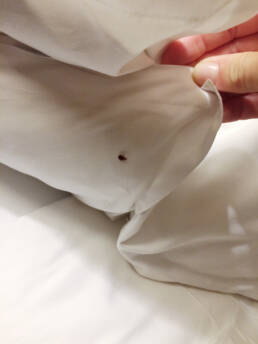
- Physical evidence: Small rust-colored stains on bedding or clothing, shedded skins, or live insects in mattress seams or furniture joints.
- Timeline: When you or your loved one first noticed something, and whether anything changed recently such as a new roommate, new furniture, or a recent hospital stay.
Photographs are especially useful. A facility administrator trying to coordinate with their pest management vendor will move faster with documentation than without it.
How to Frame the Initial Conversation
Start with the director of nursing or the facility administrator rather than front-line staff. They have the authority to act, and routing your concern through the right channel prevents it from getting lost.
Keep the tone collaborative. A phrase like “I want to make sure we figure this out together” lands differently than “someone needs to be held accountable.” You’re not letting the facility off the hook; you’re making it easier for them to do what you need them to do.
Key points to raise in that first conversation:
- Ask about their pest management protocol: A well-run facility should have a contracted pest management provider and a clear procedure for responding to suspected infestations.
- Request a professional inspection: Not a visual check by a staff member, but an inspection by a licensed pest control professional. Preferably a bed bug expert.
- Ask about notification: Find out whether other residents or families will be informed if an infestation is confirmed, and what the facility’s legal obligations are under Colorado state guidelines
- Get a timeline: Ask when you can expect an update and who your point of contact will be going forward
Protecting Your Loved One During the Process
While the facility coordinates its response, there are practical steps you can take during visits:
- Inspect the bed and surrounding furniture: Check the bedbug hotspots each time you visit. Hotspots consist of mattress seams, bed frame joints, upholstered chairs, bedside tables, couches and recliners.
- Avoid placing personal belongings on the floor or furniture: If a bedbug infestation is suspected, avoid sitting or placing belongings on or near the places listed above. Bedbugs cannot fly. Crawling up onto you or your belongings is how they can spread from a loved ones home to yours.
- Launder any clothing or items brought home: After visiting, use the high heat setting on your dryer to kill any bugs or eggs you may have brought home.
- Monitor for bites: Photograph anything that looks suspicious. Videos work too
If your loved one is distressed by the situation, keep your conversations about it calm and brief. Older adults in care settings are particularly susceptible to anxiety around issues of cleanliness and stigma. Reassure them that bed bugs are a common problem that has nothing to do with how clean their room is, and that it’s being handled.
What to Do If the Facility Is Unresponsive
Most facilities respond appropriately when a concern is raised professionally. But if days pass without a clear plan or point of contact, it’s reasonable to escalate.
In Colorado, the Health Facilities and Emergency Medical Services Division oversees licensed care facilities. Filing a concern through that channel is a formal step, but sometimes the prospect of regulatory involvement motivates a faster response. You can also consult with a bed bug specialist directly, both to confirm what you’re seeing and to understand what an appropriate treatment plan should look like. That information gives you a more informed position when pushing for action.
How Heat Treatment Applies in This Setting
When a confirmed infestation is identified in an assisted living facility, heat treatment is the most resident-friendly option available. It requires no chemicals, produces no residue, and can be completed in a single treatment rather than the multiple visits that chemical protocols typically require. For elderly residents who may have respiratory sensitivities or compromised immune systems, those distinctions matter.
Hot Bugz has direct experience working with assisted living facilities across the Denver Front Range. That experience includes understanding how to coordinate treatment around resident schedules, how to communicate with facility staff, and how to conduct the process with the discretion these environments require.
Conclusion
Raising a bed bug concern with a care facility is not a confrontation; it’s an act of advocacy. Going in prepared, staying collaborative, and knowing what questions to ask puts you in the best position to protect your loved one and get the problem resolved quickly. If the facility is responsive and transparent, work with them. If they’re not, you have options. Either way, the sooner the issue is addressed, the better the outcome for everyone in that building.
Ready for an expert opinion? Get in touch today!
We kill bed bugs in the infested space and surrounding walls by heating the space to a temperature of 135°F, killing all bed bugs and their eggs. If you have a bed bug problem, we have a solution. Exterminate bed bugs today with Hot Bugz. It’s safe and you get to keep your stuff. Call us today for a free consultation.