


Colorado doesn’t come to mind when most people think of bed bug hotspots. But ask anyone at Hot Bugz, and they’ll tell you a different story. Denver sits at the intersection of some of the most bed-bug-friendly travel patterns in the country, and the infestation rates reflect it. The city sees millions of visitors every year, supports a booming short-term rental market, and sends its own residents traveling constantly, whether for ski weekends, music festivals, or business trips. Every one of those trips is a potential vector.
Understanding why Denver has a bed bug problem starts with understanding how bed bugs actually spread. They don’t crawl in from the yard or fly in through a window. They hitchhike. A single fertilized female stowing away in a suitcase lining or a coat seam can seed an entirely new infestation. Colorado’s active, mobile population creates more opportunities for that to happen than most people realize.
Denver International Airport and the Risk Nobody Talks About
Denver International is one of the ten busiest airports in the United States. Millions of passengers move through it each year, many of them connecting from cities with known bed bug problems. Bed bugs have been documented in airport seating, on airplanes, and in the ride-share vehicles that ferry travelers to and from terminals. None of that means a trip through DIA guarantees an infestation, but it does mean each journey carries a small, real risk that compounds over time.
The people most at risk aren’t necessarily frequent fliers. Someone who takes one trip a year to a heavily visited destination, stays in a mid-range hotel, and comes home without inspecting their luggage can bring back bed bugs just as easily as a road warrior who travels weekly. The key variable is exposure, and Denver residents rack up a lot of it.
Ski Season, Short-Term Rentals, and the Turnover Problem
Summit County, Steamboat Springs, Vail, Telluride. Colorado’s ski towns draw visitors from across the world between November and April, and a significant portion of those stays happen in short-term rentals rather than traditional hotels. That matters because the regulatory and inspection frameworks are different.
Hotels, especially larger chains, tend to have pest management contracts and staff trained to spot early signs of infestation. Airbnb and VRBO properties turn over rapidly and often lack any systematic inspection process. A guest who unknowingly brings bed bugs into a mountain rental on a Friday checkout might leave behind just enough to reach the next guest’s luggage before that property is ever inspected. Those guests then return to Denver, Lakewood, Aurora, or Fort Collins, and the cycle continues.
Hot Bugz sees a predictable uptick in calls from Front Range residents following holiday weekends and peak ski season. The pattern is consistent enough that it’s not coincidence; it’s a reflection of how bed bugs move through a mobile, vacation-oriented population.
Colorado’s Festival and Event Culture Adds Another Layer
Between Red Rocks concerts, Telluride Bluegrass, Denver’s Westword Music Showcase, and a dozen other major draws, Colorado hosts events that pull tens of thousands of people into close quarters. Camping events are particularly notable because shared sleeping areas, borrowed gear, and packed festival grounds are exactly the conditions bed bugs exploit.
Bed bugs don’t require filth or disorder. A well-maintained tent at a high-end glamping festival is just as viable a habitat as a budget motel room. What they need is human warmth, a blood meal, and a surface to hide in. Sleeping bags, folding chairs, luggage, and shared blankets all qualify.
What to Watch for When You Return from a Trip
Catching an infestation early makes a significant difference in how complicated treatment becomes. After any travel involving shared sleeping spaces, it’s worth doing a quick check before bringing bags inside:
- Leave luggage in the garage or a hard-surfaced area rather than dropping it directly on carpet or a bed.
- Inspect seams, pockets, and folds of bags with a flashlight. Bed bugs and their eggs are small but visible to the naked eye.
- Run clothes through a dryer on high heat for at least 30 minutes before washing. Heat kills bed bugs at all life stages; the washer alone does not.
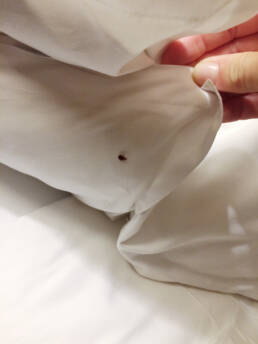
- Look for small rust-colored stains or shed skins on mattress seams in the weeks after a trip. These are early indicators that something came home with you.
Why Denver’s Housing Stock Makes Spread Easier
Denver’s rapid population growth over the past decade has driven a surge in apartment construction and dense housing development. Multi-unit buildings are a bed bug’s preferred environment, not because the residents are careless, but because shared walls, shared laundry facilities, and adjacent units create pathways that simply don’t exist in detached single-family homes.
When a unit in a Denver apartment complex develops an infestation, neighboring units are at risk even if those residents have never traveled anywhere. Bed bugs can move through wall voids, electrical conduits, and gaps around plumbing. That’s why treating only the affected unit, which many property managers default to, isn’t always sufficient. The source and scope of the infestation need to be understood before any treatment plan can actually work.
How Hot Bugz Approaches Travel-Related Infestations
One of the first things Hot Bugz does during an inspection is try to understand how the infestation started. Knowing whether it originated from a recent hotel stay, a secondhand furniture purchase, or a neighbor’s unit changes the strategy. It also helps the tenant to prevent reinfestation.
Heat treatment is particularly well-suited for travel-related infestations because bed bugs carried in on luggage,clothing,purses and backpacks will eventually move to baseboards,bedframes,bedside tables, and of course, your mattress. Chemical treatments require direct contact to work, which means bed bugs hiding deep in these spots can survive multiple spray applications. Heat penetrates those spaces completely, reaching a lethal temperature in areas that sprays never touch.
The chemical resistance issue compounds the problem. Bed bug populations have developed resistance to many commonly used pesticides over the past two decades. A treatment that might have worked reliably in 2005 is far less predictable today. Heat remains effective regardless of resistance because it works through a physical mechanism, not a chemical one. There is no version of a bed bug that can survive sustained exposure to 135 degrees Fahrenheit.
Colorado’s Lifestyle Is Worth Protecting
The same things that make Colorado a remarkable place to live, the skiing, the concerts, the outdoor culture, the constant movement, are the things that make bed bug exposure an ongoing reality for Front Range residents. That’s not a reason to travel less. It’s a reason to know what to look for and to act quickly when something seems off.
If you’ve recently traveled and are seeing unexplained bites, small stains on bedding, or any of the other early warning signs, don’t wait. Bed bug populations double roughly every two to three weeks. An infestation that might require a single room treatment in week one can require a full home treatment by week six. Hot Bugz offers same-day inspections across the Denver Front Range, and the sooner an infestation is confirmed, the simpler the path forward.
Ready for an expert opinion? Get in touch today!
We kill bed bugs in the infested space and surrounding walls by heating the space to a temperature of 135°F, killing all bed bugs and their eggs. If you have a bed bug problem, we have a solution. Exterminate bed bugs today with Hot Bugz. It’s safe and you get to keep your stuff. Call us today for a free consultation.
Like this article? Spread the word!
Related Posts