


Denver’s secondhand shopping scene is genuinely good. From the thrift stores along South Broadway to the weekend estate sales in older neighborhoods like Congress Park and Hilltop, the city has built a real culture around reuse and resale. Vintage furniture, mid-century pieces, quality items at a fraction of retail price — the appeal is obvious. The risk that comes with it is less talked about.
Bed bugs travel on furniture the same way they travel in luggage. A dresser, upholstered chair, or bed frame that sat in an infested home carries that problem with it, often invisibly, until it’s sitting in yours. Hot Bugz fields calls regularly from people who traced an infestation back to a single secondhand purchase. The item looked clean. There was no way to tell just by looking quickly.
That’s the core of the problem. Bed bugs are excellent at hiding, and a visual inspection at a thrift store or estate sale, done quickly under poor lighting, is not enough to catch them reliably.
What Bed Bugs Look Like in Furniture
Adult bed bugs are roughly the size and shape of an apple seed, flat, oval, and reddish-brown. They’re visible, but only if you know where to look and take the time to actually look there. Nymphs are smaller and nearly translucent, making them much harder to spot. Eggs are white, about a millimeter long, and typically laid in clusters in recessed areas.
In furniture, the places they concentrate are almost never the obvious ones. Look beyond the surface and focus on:
- Seams, tufting, and folds on upholstered pieces, where fabric meets fabric
- Joints and screw holes in wooden frames, headboards, and dressers
- The underside and interior drawer tracks of dressers and nightstands
- Stapled fabric on the underside of chairs, sofas, and ottomans
- Cracks in wooden slats on bed frames and bookshelves
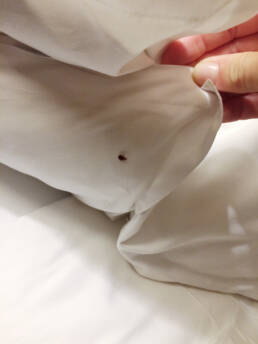
Dark spots smaller than a poppy seed, which are bed bug excrement, and shed skins are often easier to find than the bugs themselves. Either one is enough reason to walk away. (Pro tip: Wet the tip of your finger and drag it over a suspected bedbug poop spot. If the spot smears like ink it’s most likely from a bedbug.)
The Items That Carry the Highest Risk
Not all secondhand items carry equal risk. Soft, upholstered furniture is the highest concern because it offers the most surface area and the most hiding places. Bed frames and headboards are high risk for obvious reasons. Mattresses and box springs are in a category of their own, and most experienced buyers avoid purchasing those secondhand entirely regardless of how clean they appear.
Wooden furniture with minimal upholstery carries lower risk but isn’t risk-free. Solid hard items like metal shelving, glass, or plastic furniture are generally safe. The rule of thumb is that the more fabric, seams, and crevices an item has, the more carefully it needs to be inspected before it comes inside.
How to Inspect Before You Buy
At an estate sale or private sale, you have more latitude than at a thrift store. Bring a flashlight, even a phone flashlight works, and take time to examine the piece properly before committing.
At a thrift store, inspection is harder. Lighting is often poor, items are crowded together, and store staff aren’t going to let you spend twenty minutes with a flashlight examining a chair. In those environments, the best approach is to buy only what you’re willing to inspect thoroughly at home before bringing it inside, and to have a plan for doing that safely.
What to Do When You Get Home
Even if an item looks clean at the point of purchase, treating it before it enters your living space is worth the effort. The garage or a hard-surfaced outdoor area is the right staging ground, not the living room floor.
For upholstered items, a portable heat treatment is the most reliable option. Bed bugs die at sustained temperatures above 125 degrees Fahrenheit, and a clothes dryer on high heat can handle cushion covers, removable fabric components, and anything else that fits. The item itself is harder to treat at home without professional equipment. (Pro tip: people have found success using heavy duty hair dryers to treat certain items. It’s not a perfect method by any means so proceed with caution)
Encasing a secondhand mattress or box spring immediately, before it ever goes on a bed frame, limits any potential exposure while you monitor for signs of a problem. For wooden pieces, a thorough wipe-down with a stiff brush along all joints and crevices, followed by close monitoring over the first few weeks, is a reasonable precaution. Paint or Polyurethane laid across every crack and crevasse can also work.
When to Call Before the Problem Gets Bigger
The frustrating thing about a furniture-introduced infestation is that it often isn’t discovered until several weeks after the purchase, once the population has had time to establish and spread. By then the bugs aren’t confined to the original piece. They’ve moved into the surrounding bed frame, baseboards, or nearby furniture.
Early signs to watch for after bringing secondhand furniture home include unexplained bites that appear overnight, small rust-colored stains on bedding or nearby upholstery, and shed skins in the seams of adjacent furniture. Any of those warrant a professional inspection, not a DIY treatment attempt. Home remedies and over-the-counter sprays rarely eliminate an established infestation and frequently push the bugs deeper into hiding, making professional treatment more complicated.
Conclusion
Denver’s secondhand furniture culture isn’t going anywhere, and it shouldn’t. The value is real and the environmental case for reuse is solid. But bed bugs are a genuine and underappreciated risk in that market, and a single infested purchase can turn into a significant problem surprisingly fast. Inspect carefully before you buy, stage items outside before they come in, and know what early warning signs to watch for. If something looks off in the weeks after a purchase, getting a professional assessment early is far less disruptive than dealing with a full infestation later.
Ready for an expert opinion? Get in touch today!
We kill bed bugs in the infested space and surrounding walls by heating the space to a temperature of 135°F, killing all bed bugs and their eggs. If you have a bed bug problem, we have a solution. Exterminate bed bugs today with Hot Bugz. It’s safe and you get to keep your stuff. Call us today for a free consultation.